What Dryer Vent Repair in Highland Village Includes
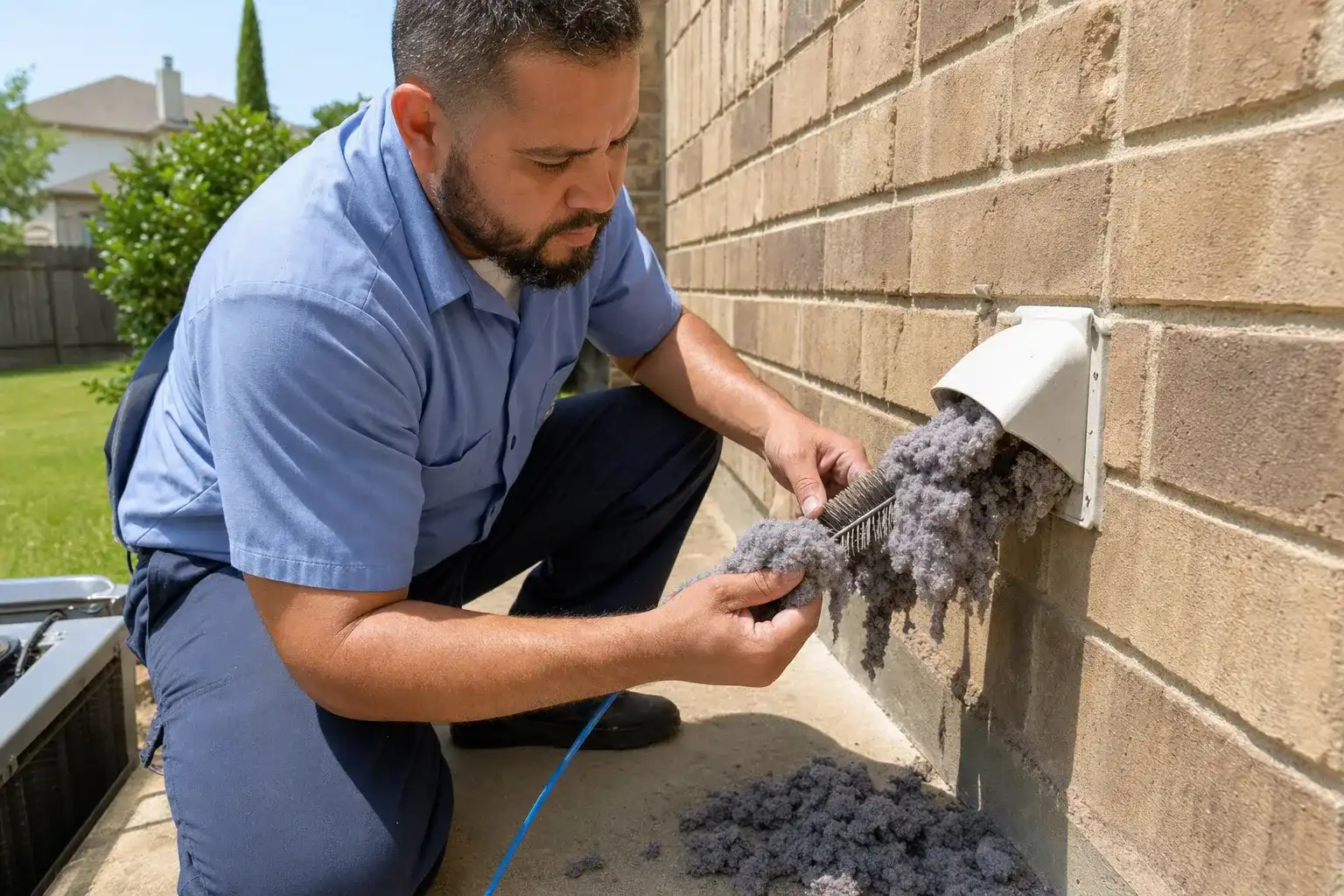
Cooper’s Air Duct Cleaning repairs dryer vents in Highland Village and the towns around Lewisville Lake. Cleaning removes lint. Repair fixes the pipe, the route and the cap so lint stops building up in the first place. We do both, and we tell you which one you need.
Dryer vent repair covers:
- Replacing the hose behind the dryer (foil, plastic or crushed metal)
- Reconnecting joints that pulled apart in the wall or attic
- Rerouting a vent that dumps into the attic, crawl space or garage
- Shortening a run that is too long or has too many elbows
- Installing or replacing roof caps and wall caps
- Removing mesh screens and installing bird guards that do not catch lint
- Sealing joints with foil tape and clamps
Every repair ends with a test cycle and before-and-after photos. You get a written price before we start.
Common Dryer Vent Problems We Fix
Most repair calls come down to one of these. If you see one, the vent needs more than a cleaning.
Crushed hose behind the dryer. The dryer gets pushed back against the wall and flattens the hose. Air cannot pass. This is the most common problem we find, and it takes minutes to fix.
Foil or plastic hose. The thin, ribbed hose sold in hardware stores traps lint in every ridge and tears easily. Most dryer makers now say not to use it. We swap it for smooth metal.
Vent that ends in the attic. Some older homes, and some rushed remodels, have a vent that stops short of the roof. Warm, wet lint blows onto the insulation. We see this during attic checks in homes built in the 1980s and 1990s.
Disconnected joint. A section of pipe in the attic comes apart. The dryer blows lint into the attic and the cap on the roof stays clean, which hides the problem.
Cap with a screen or stuck flap. A fine mesh screen on the cap clogs with lint within months. A flap that is painted shut or rusted stops air the same way.
Bird or rodent nest. Birds love a warm vent in spring. A nest in the pipe can block it completely.
Dryer Vent Rerouting
The best dryer vent is short and straight. Many homes in Highland Village have the laundry room in the center of the house, so the vent climbs through the attic to a roof cap. Each elbow and each extra foot slows the air and catches lint.
When we reroute a vent, we look for the shortest legal path to the outside. Sometimes that means moving from a roof cap to a side wall. Sometimes it means replacing a run of flexible pipe in the attic with rigid pipe, which has a smooth inside and fewer places for lint to stick. If the run cannot be shortened, a dryer booster fan can keep the air moving. We explain the options and put the price in writing.
Roof Caps, Wall Caps and Bird Guards
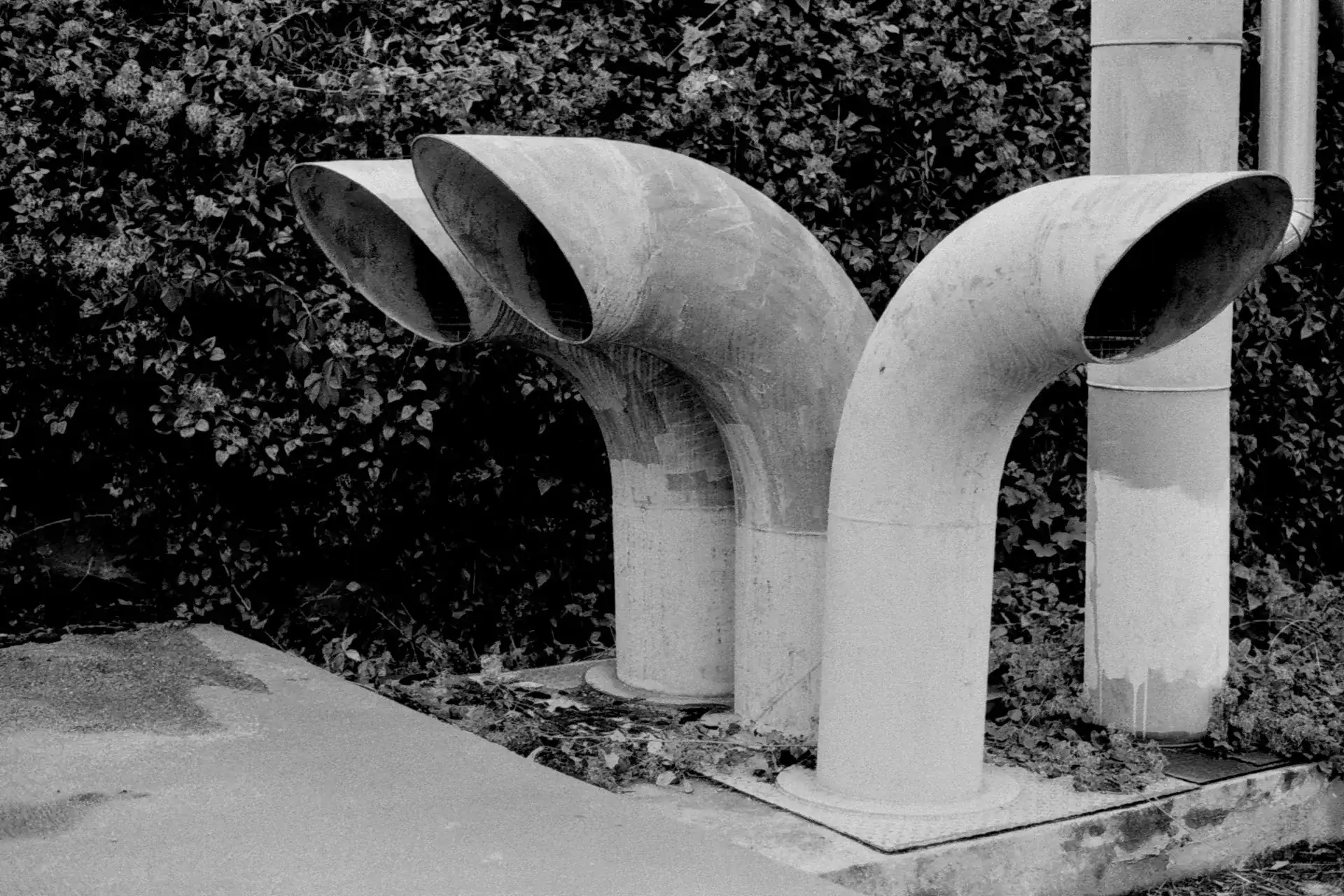
The cap is the end of the line, and it fails more than any other part. A good cap has a flap or louvers that open when the dryer runs and close when it stops. It keeps rain, birds and cold air out without catching lint.
We install and replace:
- Louvered wall caps with a backdraft flap
- Roof caps with a hood and flap, sealed at the flashing
- Bird guards with wide openings, not fine mesh
- Caps for the side of the house when we reroute a vent off the roof
If the old cap has a mesh screen, we remove it. Screens are the number one reason a cap clogs.
How We Repair a Dryer Vent
- We pull the dryer out and inspect the hose, the wall connection and the first joint.
- We check the full run in the attic or wall, and the cap outside, often with a camera on long runs.
- We show you what we found and give you a written price for the repair. You approve it before we start.
- We make the repair: new hose, reconnected or replaced pipe, new route, or new cap.
- We clean the line so the repaired vent starts clean.
- We run a test cycle, check airflow at the cap, and take the after photos.
If the vent only needs a cleaning, we tell you that too. Our dryer vent cleaning in Highland Village page explains that service.
Why Highland Village Dryer Vents Fail
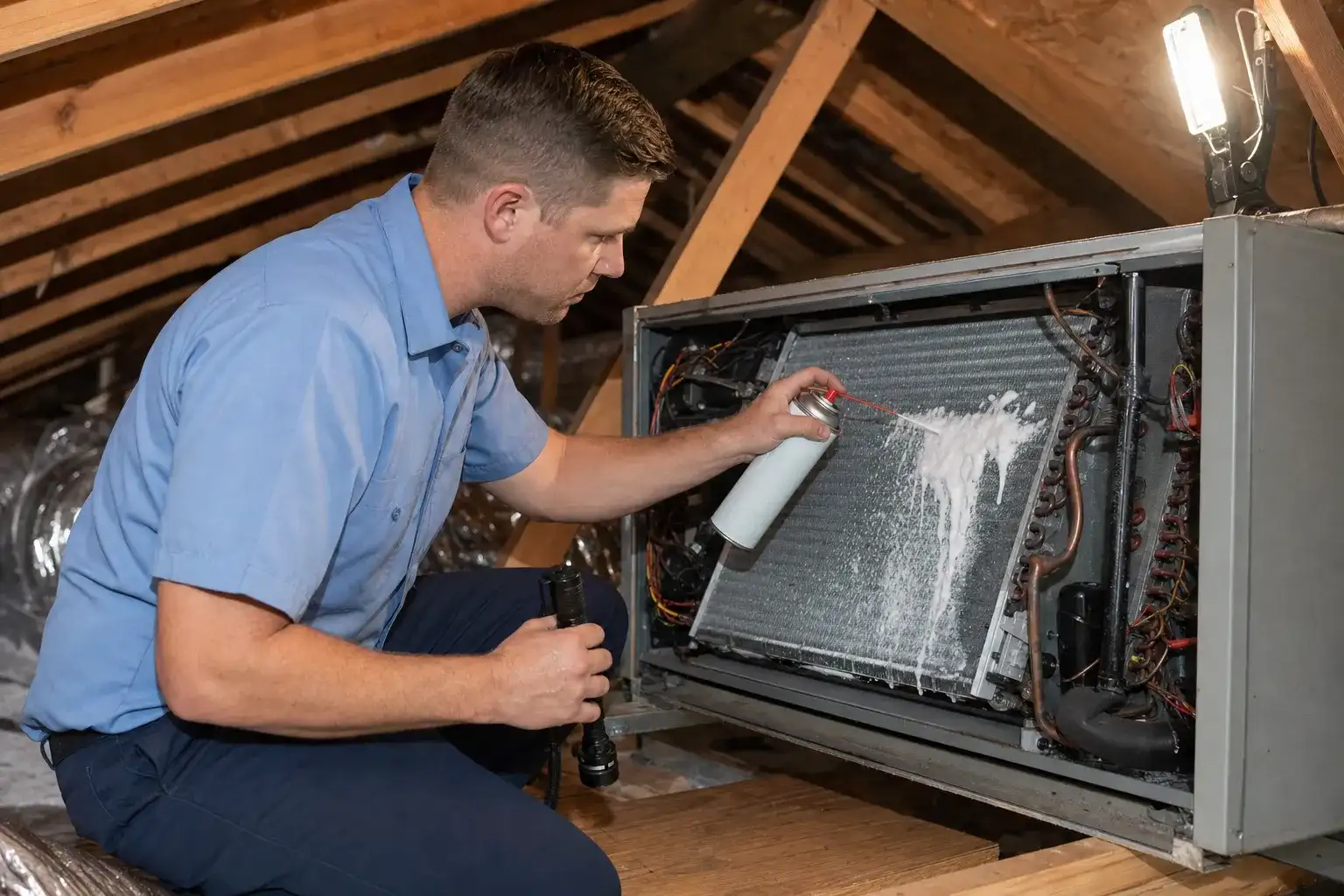
The homes here were mostly built between the 1980s and the 2000s. Builders of that era often used flexible foil pipe through the attic, and 20 to 40 years of heat have worn it out. Attics in North Texas pass 130 degrees in summer. That heat makes old foil brittle and loosens the tape on joints. We find separated joints in attics across Highland Shores, Briarhill Estates and Canyon Creek Estates.
The lake adds its own problems. Damp air off Lewisville Lake rusts roof caps and metal flaps faster than in drier parts of Dallas. And the trees around Pilot Knoll Park and the shoreline mean plenty of birds looking for a warm pipe to nest in each spring.
Why a Broken Dryer Vent Is a Fire Risk
Lint is the fuel. The National Fire Protection Association reports that U.S. fire departments responded to about 15,970 home fires a year involving clothes dryers or washing machines from 2010 to 2014, and 92 percent of those fires involved dryers. Dust, fiber or lint was the item first ignited in 26 percent of dryer fires. The full NFPA report on home dryer fires is on the NFPA website.
A broken vent is worse than a dirty one because the lint builds up where you cannot see it, inside a wall or on top of attic insulation. Repairing the vent, then keeping it clean, removes that hidden pile.
Dryer Vent Repair and Other Duct Work
Dryer vents are not the only ducts that get crushed or come apart in a hot attic. If we find the same problems with your AC ducts, our air duct repair service fixes torn or disconnected flex duct and bad boots in the same visit. For a full look at the ducts with a camera and a photo report, see air duct inspection. Both come from the same air duct cleaning company in Highland Village with one written price.
Get a Free Quote
If your dryer is slow after a cleaning, the hose is crushed, or you think the vent ends in the attic, call or send the form. We will look at the vent, give you a written price before we start, and send before-and-after photos when the repair is done. We answer 7 days a week and serve Highland Village, Flower Mound, Lewisville, Lantana, Double Oak, Copper Canyon, Bartonville, Argyle, Corinth, Lake Dallas, Hickory Creek and Denton.