What Duct Sealing in Highland Village Includes
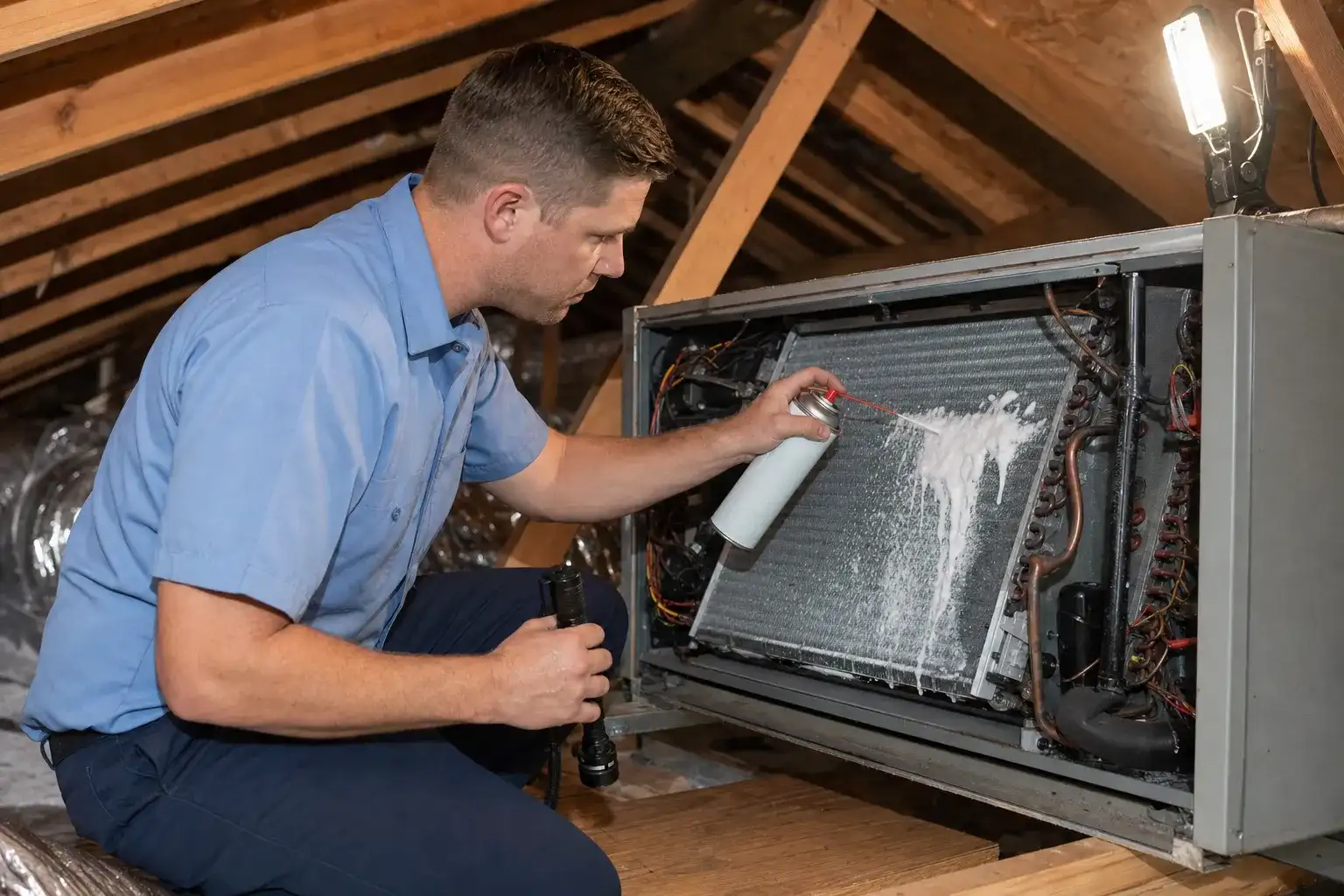
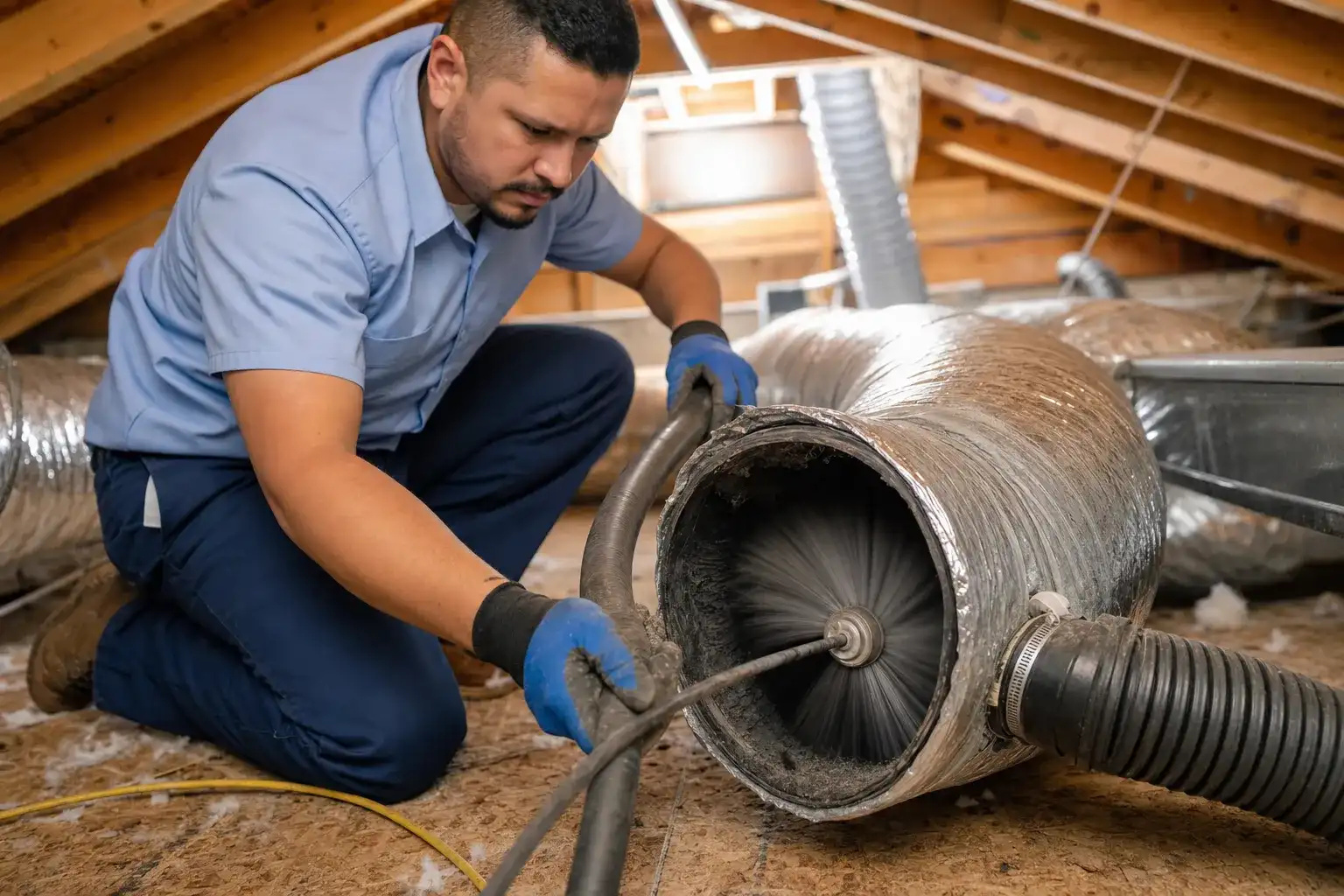
Cooper’s Air Duct Cleaning seals air ducts in Highland Village from the attic side, by hand, at the places where leaks actually happen. A duct system is a chain of connections, and every connection is a chance to leak. The service covers:
- An inspection of every reachable duct run, collar, boot and plenum seam
- An airflow check at each register before and after the work
- Mastic on joints, collars and boot flanges, with fiberglass mesh on wider gaps
- UL 181 foil tape on flat metal seams and the outer jacket of flex duct
- Re-strapping and re-connecting any run that has pulled loose, before it is sealed
- Photos of each sealed joint, so you see where the air was going
If a run is torn, crushed or chewed, sealing is the wrong fix. That is air duct repair, and we quote it separately so you know which problem you are paying to solve.
How Much Air Do Leaky Ducts Lose?
Energy Star puts a number on it. According to the Energy Star duct sealing guide, in a typical house about 20 to 30 percent of the air that moves through the duct system is lost because of leaks, holes and poorly connected ducts.
Think about what that means in Highland Village. Your AC cools air to send to the bedrooms. A fifth to a third of it never gets there. It leaks into an attic that is 130°F in July, where it does nothing but warm back up. The AC runs longer, the rooms at the end of the longest runs stay warm, and the system wears faster.
Where Ducts Leak in Highland Village Homes
Most homes here were built from the 1980s through the 2000s with flex duct in the attic, and the leaks follow the same pattern from house to house:
| Leak point | What we find |
|---|---|
| Collars at the trunk or plenum | Inner liner held on with a zip tie and old cloth tape that has dried out |
| Boots behind the registers | Boot pulled away from the drywall; cooled air blows into the ceiling cavity |
| Plenum seams | Metal corners never sealed, or sealed with tape that has peeled |
| Flex duct connections | Outer jacket taped but inner liner loose, so air leaks into the insulation |
| Return plenum | Built from the furnace platform with gaps that pull hot attic air into the system |
| Panned returns | Joist bays used as return ducts with open ends behind the drywall |
The return side matters as much as the supply side. A leaking return pulls 130°F attic air, attic dust and insulation fibers into the blower and across the coil. That is one reason an HVAC system cleaning often finds a dirty coil in a house with a leaky return plenum.
How We Seal Air Ducts
- We inspect every reachable run in the attic and note each leak with a photo.
- We check airflow at each register so we have a before number to compare against.
- We reconnect and re-strap any run that has pulled loose, and replace any section too damaged to seal.
- We brush mastic over every joint, collar and boot flange. On gaps wider than a pencil we embed fiberglass mesh in the mastic.
- We tape flat metal seams and flex duct jackets with UL 181 foil tape, pressed down hard so it bonds.
- We seal the supply and return plenum seams and the gap where the plenum meets the air handler.
- We re-check airflow at each register and photograph the sealed joints.
Mastic vs Tape
People ask why we do not just tape everything. The short answer is attic heat.
- Mastic is a paste that fills gaps, cures hard, and holds through years of 130°F summers. It is the right choice for collars, boots and any joint that is not perfectly flat.
- UL 181 foil tape is rated for ducts and works on clean, flat metal seams and on flex duct jackets. It must be pressed firmly and the surface must be dust free.
- Cloth duct tape, the gray kind, is not rated for ducts despite the name. Its adhesive dries out in a hot attic and the tape falls off. Many attic leaks are joints that were “sealed” with cloth tape 15 or 20 years ago and have since let go.
Signs Your Ducts Are Leaking
- One or two rooms stay warm no matter what the thermostat says
- The summer electric bill is high for the size of the home
- Dust shows up on furniture within a day or two of cleaning
- The attic near the ducts feels cooler than the rest of the attic
- A register barely blows while the one next to it blows hard
An air duct inspection with photos is the quickest way to confirm which of these you have. Leaks and blockages look different on camera, and the fix is different too.
Why Highland Village Attics Make Leaks Expensive
Highland Village summers run past 100°F, and central AC here runs from April into October. In neighborhoods like Briarhill Estates, Castlewood and Canyon Creek Estates, the air handler sits in an attic that climbs past 130°F in the afternoon. Every leak in that attic is a hole between your cooled air and the hottest space in the house.
Leaks also pull the other way. A leaky return draws attic air, attic dust and lake humidity into the system. The humid air crosses a cold coil, the coil stays wet, and the musty smell starts. Sealing the return side is as much about air quality as it is about the bill, which is why sealing is often paired with duct mold removal when we find growth at the coil.
Duct Sealing vs Duct Repair
They are different jobs, and we quote them separately:
- Sealing closes gaps at joints that are otherwise sound. The duct stays; the leak goes.
- Repair replaces or rebuilds duct that is torn, crushed, disconnected, chewed by rodents or too small. Sealing a crushed duct just makes a tight, crushed duct.
Most attics need some of both. As an air duct cleaning company in Highland Village, we do the repair, the sealing and the cleaning in one visit when the house needs all three, so you are not scheduling three contractors.
Get a Free Quote
If a room never cools or the electric bill does not match the house, call or send the form. We will inspect the attic ducts, show you the leaks on camera, and give a firm written price before any work starts. You get before-and-after photos of every sealed joint. We answer 7 days a week and serve Highland Village, Flower Mound, Lewisville, Double Oak, Copper Canyon, Bartonville, Argyle and the rest of southern Denton County.