The Short Answer
Most homes in North Texas do not need duct cleaning every year. The U.S. Environmental Protection Agency does not recommend cleaning on a routine schedule at all. It says to clean when there is a reason: visible mold inside the ducts or on other parts of the system, vermin in the ducts, or ducts clogged with enough dust and debris that it is coming back out of the registers.
The National Air Duct Cleaners Association (NADCA) tells homeowners to have the ducts inspected at least once a year and cleaned as needed. Cost guides such as HomeGuide and Fixr put the typical cleaning interval at three to five years. That is a starting point, not a rule.
Cooper’s Air Duct Cleaning uses both for homes in Highland Village: a two-year check, a three-to-five-year cleaning, and the cleaning moved up or back based on what the check finds. Here is what moves it.
What the EPA Actually Says
The EPA’s page on duct cleaning is more cautious than most duct cleaning ads. The main points:
- Duct cleaning has never been shown to prevent health problems on its own, and studies do not prove that dust levels in a home rise because of dirty ducts.
- Cleaning makes sense when there is visible mold growth on hard surfaces, when ducts are infested with rodents or insects, or when ducts are clogged with dust and debris that is being released into the home.
- If you do clean, clean the whole system, not just the ducts. A dirty coil or blower re-dirties clean ducts.
You can read the full page here: Should You Have the Air Ducts in Your Home Cleaned?
A company that cleans ducts for a living should be the first to say not every home needs it every year.
What NADCA Suggests
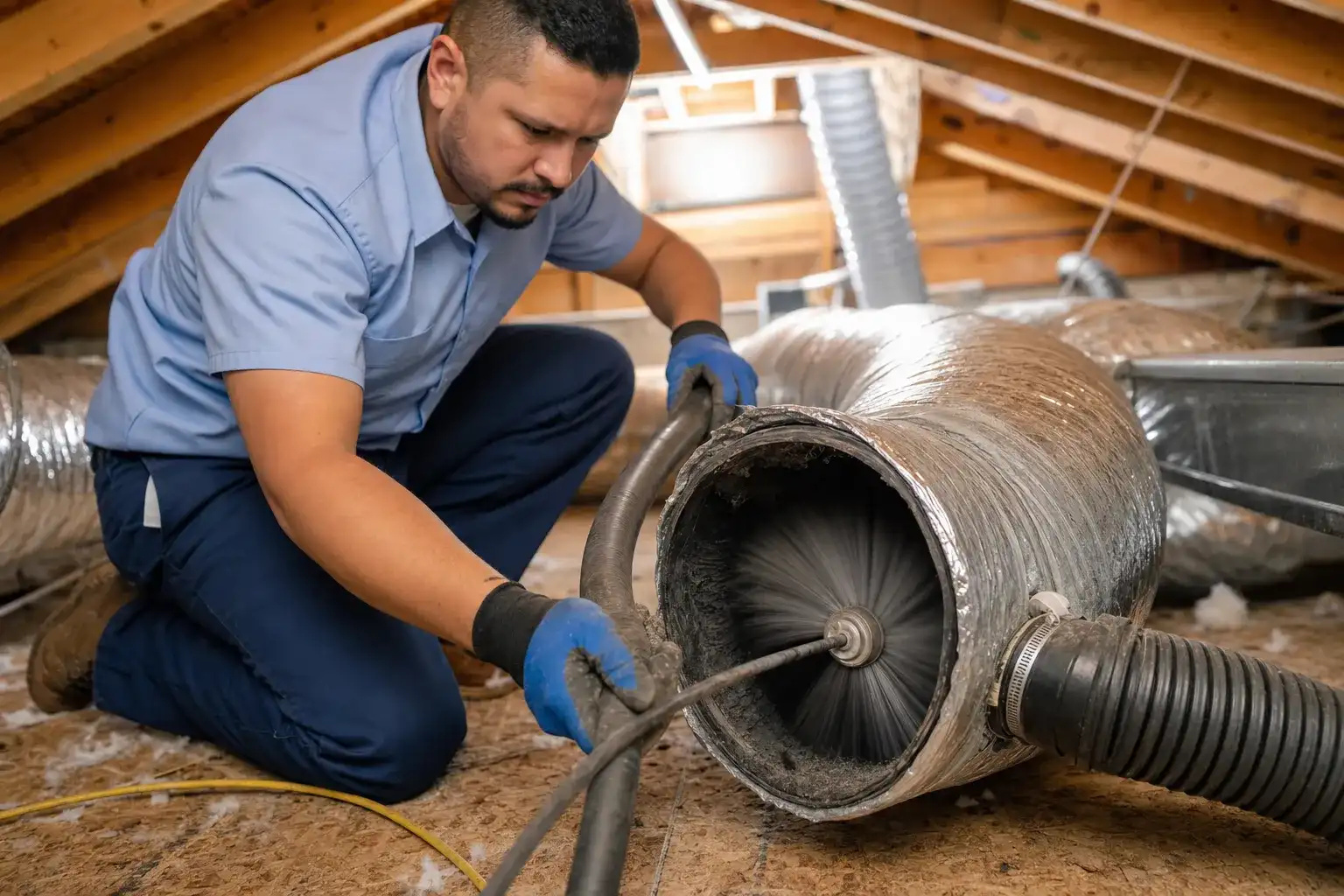
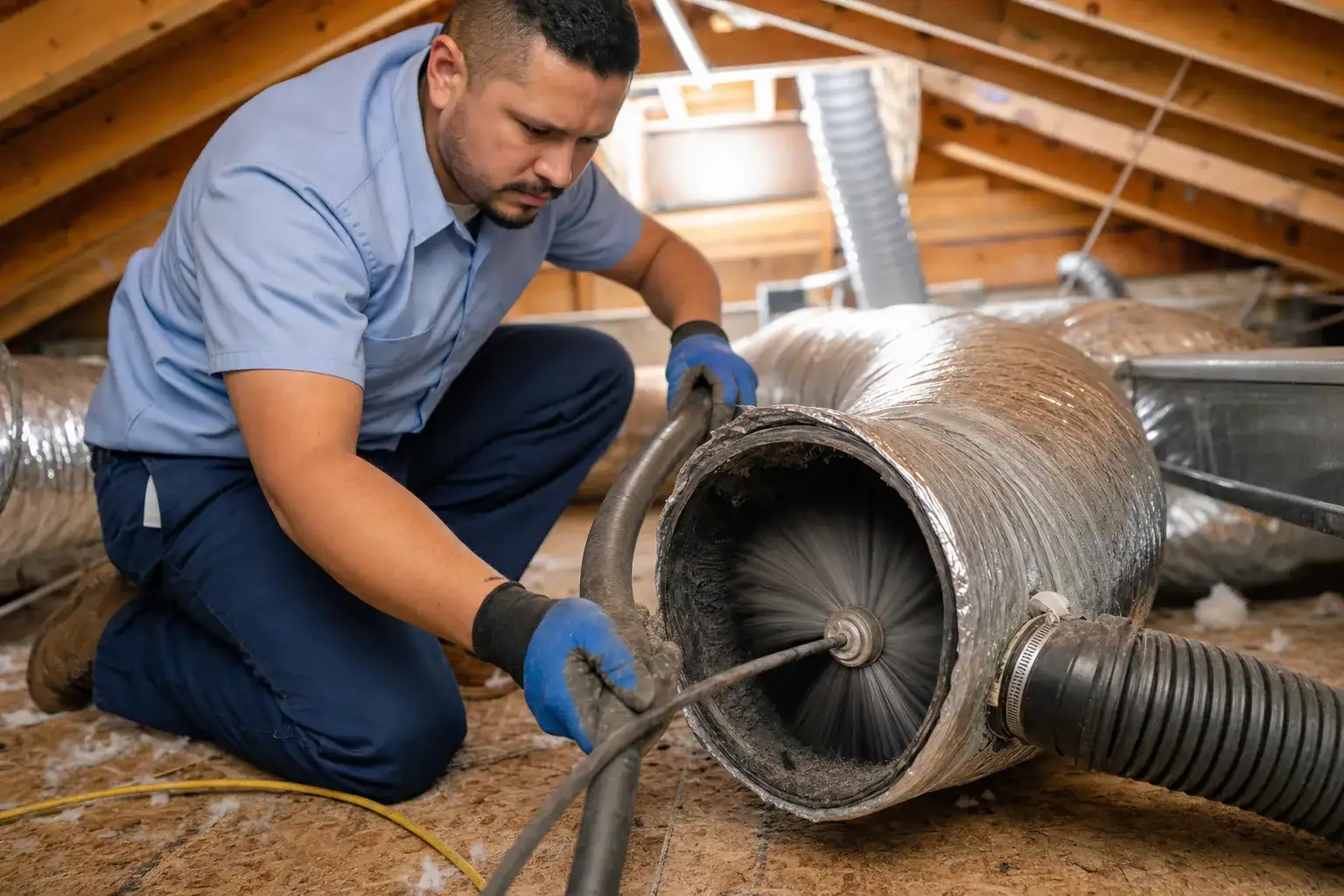
NADCA writes the ACR Standard, the industry standard for how a cleaning should be done: negative pressure on the system, agitation of every run, cleaning of the air handler parts, and a check at the end. NADCA’s general guidance for homeowners is an inspection every two years and a cleaning every three to five years.
The two-year inspection is the part most people skip. A quick camera look inside a few runs tells you whether the cleaning is due early, on time, or can wait. Our air duct inspection does that, with a photo report you keep.
What Changes the Timeline in North Texas
NADCA’s numbers are national. Here is what pushes the cleaning closer in Highland Village.
Attic heat
Nearly every home in Highland Village has the furnace or air handler and the flexible duct in the attic. North Texas attics pass 130°F in summer. The flex duct carries cold air through that heat, so moisture forms on the outside and sometimes the inside of the runs. Dust sticks to damp surfaces.
Pollen
Mountain cedar pollen runs from December into February. Oak and grass pollen follow in spring. The filter catches most of it, but a standard one-inch filter is not fine enough to catch all of it. What gets past the filter ends up on the coil and in the supply ducts.
Pets
A dog or two moves the schedule up. The filter catches most pet hair, but the return ducts and the boots behind the registers collect what the filter does not. Homes with several pets, or a pet that sheds heavily, are the ones most likely to show a fuzzy layer at the two-year check.
Remodels and new construction
Drywall dust is fine enough to get through almost any filter. If the system ran during a kitchen remodel, a flooring job, or new construction, the ducts, coil and blower are coated. A post-construction duct cleaning right after the work is done is the fix, and then the normal timeline starts over.
Lake humidity and pests
Homes near Lewisville Lake and Copperas Branch Park carry more moisture in the air, which keeps the inside of the ducts damp longer, and damp ducts are where black spots start. Attics near the lake and the greenbelts also see more rodents and insects, one of the EPA’s three reasons to clean.
A Simple Schedule for a Highland Village Home
This follows NADCA’s yearly inspection advice and the three-to-five-year interval cost guides quote, adjusted for the local factors above.
| Your situation | Inspect | Clean |
|---|---|---|
| No pets, no smokers, new filters on time | Every year | Every 4 to 5 years |
| One or two pets | Every year | Every 3 to 4 years |
| Allergy sufferer in the home, several pets | Every year | Every 2 to 3 years |
| Just finished a remodel or moved into a new build | Now | Now |
| Visible mold, droppings, or dust blowing from registers | Now | Now, after the source is found |
The inspection tells you whether to move it.
Signs You Should Not Wait
Some things mean the schedule no longer matters and it is time to look inside:
- Dust shows up on furniture within a day or two of dusting
- Black spots on or around the supply registers
- A musty smell when the AC or heat first comes on
- Droppings, nesting material or insulation bits at a register
- You just bought the home and have no record of a cleaning
Any one of these is a reason for an inspection. Two or more usually mean a duct cleaning.
How to Check Without Guessing
Pull a register and look inside with a flashlight. A thin gray film is normal. A fuzzy layer, black spots or debris means it is time.
If you cannot see far enough in, a camera inspection with a photo report settles it. If the ducts are clean, we say so and you keep the photos. If they need it, our air duct cleaning service in Highland Village covers the ducts, boots and registers, with the coil and blower added when they need it too.
The dryer vent runs on a different clock. Lint is a fire risk, not a dust problem, so see our dryer vent cleaning page for that schedule.
Get a Free Quote
Cooper’s Air Duct Cleaning answers 7 days a week. Call or send the form to request a free quote for an inspection or a cleaning. We give you a written price before we start and before-and-after photos of the ducts on every job.